Gutter guards still collect things
Covers keep the leaves out of the trough. They do not stop fine litter from piling on top or sediment from building underneath.
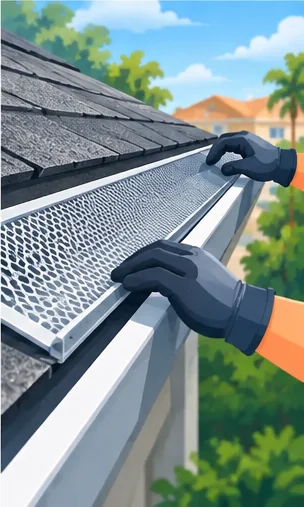
What guards do and do not do
Screens, mesh and reverse-curve covers all work on the same idea: let water in, keep large debris out. They tend to handle whole leaves better than small material. Acorn caps, tiny leaf fragments, pollen and roof grit can still lodge in the surface or slip through to the trough below.
Under oaks that drop in several waves, a guard's top surface can end up carpeted. Water then sheets past the edge instead of entering, which looks a lot like an ordinary overflow. How well any product performs depends on its design and how it was installed, so treat sweeping claims with caution.
Cleaning on top and underneath
Maintenance has two parts. The surface gets brushed or blown clear, and then we check beneath the cover. Some guards lift out, others are fastened under roofing edges or screwed down. How easily we can reach the trough depends on which type is on the house.
It is worth telling us what is installed, and if possible roughly when. If a section must be removed and put back, we raise that when we call to confirm the details, so it is part of the quote rather than a surprise on the day.
A realistic schedule
Covered gutters usually need visits less often than open ones, but not never. A sensible rhythm for oak-shaded homes follows the same calendar as everyone else: after the spring shed, before the wet season, and once the fall and winter drop is done. The Heathrow gutter guide lays out those windows month by month.
Guards are also a physical change to the exterior of a house. In an association-governed community, any new product may need architectural review first, covered on the condo and HOA page.
Clear the path before the next storm
A short request now can set up a clean-out ahead of the heavy rain. Send the details and we will call to confirm them.